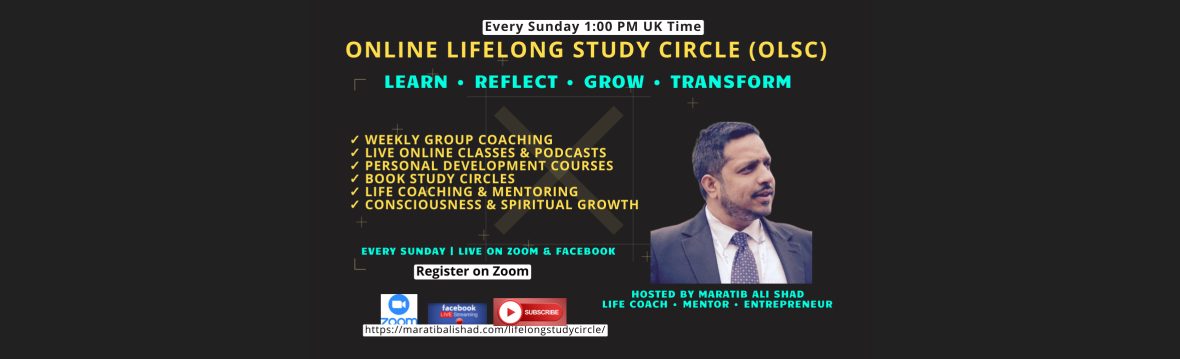

Four-Week Interactive Online Study Circle
Beyond Pain: A Spiritual Path to Healing and Inner Freedom
Can pain be present without defining the whole of our experience?
Persistent pain can affect the body, thoughts, emotions,
relationships and spiritual life.
Beyond Pain is a guided four-week exploration
of how awareness, acceptance, surrender and compassionate
practice may change our relationship with pain and the
suffering that gathers around it.
The programme is inspired by Chapter 10, “Pain and Suffering,”
from Dr David R. Hawkins’ Healing and Recovery.
We will study its central arguments critically and practically,
combining short textual excerpts with reflection, live
discussion, guided exercises and weekly application.
This is not passive video viewing. The main classes will take
place live and interactively on Zoom, giving participants space
to listen, practise, ask questions and reflect with others.
Mark All Four Dates in Your Diary
Live Class Schedule
Each class begins at
1:00 PM London time (GMT).
Please register in advance and join a few minutes early so you
can settle before the session begins.
Sunday, 1 November 2026
1:00 PM GMT
Sunday, 8 November 2026
1:00 PM GMT
Sunday, 15 November 2026
1:00 PM GMT
Sunday, 22 November 2026
1:00 PM GMT
Academic Study with Practical Application
The Four-Class Programme
The sequence moves from understanding the experience of pain,
through resistance and surrender, towards a balanced personal
practice that respects body, mind and spirit.
Pain, Suffering and the Place of Awareness
Central question:
What changes when we distinguish physical sensation from
the emotional and mental struggle surrounding it?
“Pain is one thing, and the suffering about it is another.”
David R. Hawkins,
Healing and Recovery,
Chapter 10, p. 303
We Will Examine
- The physical, mental and spiritual dimensions of
human experience. - Hawkins’ distinction between pain and suffering.
- The proposed sequence of body, sensation, mind,
consciousness and awareness. - How fear, anticipation and mental narratives can
add distress. - Why acceptance must not be confused with neglecting
the body.
Live Practice and Application
- A short “sensation, story and awareness” exercise.
- Separating what is being felt now from predictions
about the future. - Reflective discussion: “Is pain present, or has pain
become my identity?” - Home practice: a seven-day pain-and-awareness
journal.
Learning outcome:
Participants should leave able to name the physical
sensation, identify the story surrounding it and choose
a wiser immediate response.
Resistance, Willingness and Wordless Experience
Central question:
Can we listen to the body directly, without immediately
becoming trapped in labels, fear and resistance?
“It is desirable to clearly differentiate the feeling,
sensation, or experience from the thoughts.”
David R. Hawkins,
Healing and Recovery,
Chapter 10, p. 312
We Will Examine
- Resistance as a secondary struggle rather than the
original sensation. - The difference between direct experience and the
label placed upon it. - Neutrality and willingness within Hawkins’ Map of
Consciousness. - Common emotional layers: fear, anger, grief,
helplessness and self-pity. - The difference between acceptance, resignation and
suppression.
Live Practice and Application
- Moving attention from labels to the wordless
qualities of sensation. - A resistance inventory: “What am I fighting in this
moment?” - Practising the language of willingness:
“For this moment, I can allow what is already here.” - Home practice: observe one recurring reaction
without judging or forcing it away.
Learning outcome:
Participants should be able to recognise resistance
without blaming themselves and experiment with a more
neutral, compassionate stance.
Surrender, Compassion and the Power Beyond the Personal Self
Central question:
What can spiritual surrender offer when personal control
has reached its limits?
“I kept surrendering the pain, turning it over to that Power.”
David R. Hawkins,
Healing and Recovery,
Chapter 10, p. 322
We Will Examine
- Surrender as releasing the burden of total personal
control. - Calling upon Allah, God, Higher Power or the sacred
according to one’s tradition. - Forgiveness, self-compassion and release from guilt.
- The distinction between spiritual surrender and
passive resignation. - How caregivers can support without minimising
another person’s pain.
Live Practice and Application
- A guided surrender practice using safe and inclusive
language. - Writing down what can be acted upon and what must be
released. - Compassionate listening through paired or group
reflection. - Home practice: a daily five-minute prayer or
surrender period.
Learning outcome:
Participants should develop a personal form of surrender
that supports wise action rather than replacing it.
Integration: Relaxation, Support and a Personal Recovery Practice
Central question:
How can spiritual practice, emotional awareness and
appropriate physical care be brought together responsibly?
“Another assist to healing pain or any other distress is
to listen to great, beautiful music.”
David R. Hawkins,
Healing and Recovery,
Chapter 10, p. 328
We Will Examine
- Hawkins’ ten-level progressive relaxation method.
- Self-suggestion, concentration and the difference
between practice and promise. - Humour, music, beauty and supportive relationships.
- The proper place of doctors, physiotherapy,
medication and other professional care. - How to maintain practice without becoming obsessed
with symptoms.
Live Practice and Application
- A guided whole-body progressive relaxation.
- Reviewing insights from the previous three weeks.
- Creating a personal body-mind-spirit support plan.
- Choosing one practice to continue for the following
30 days.
Learning outcome:
Participants should finish with a realistic and personally
meaningful practice that complements appropriate
healthcare.
Who Is This For?
A Shared Study Space for Experience and Compassion
This course welcomes adults experiencing persistent or
recurring pain, family members and caregivers, and spiritual
seekers interested in consciousness, healing and the human
response to suffering.
You do not need to agree with every claim in the chapter.
The purpose is to study thoughtfully, test safe practices
through personal experience and distinguish spiritual
insight from medical diagnosis.
Registration Is Now Open
Join the Live and Interactive Classes
Register for the main Zoom study circle now, then place all four
Sunday dates in your diary. You can also follow the Facebook
page and subscribe on YouTube for related live content and
future studies.
After registering, please keep your confirmation details safe.
For the most interactive experience, join through Zoom.
About the Teacher and Facilitator
Maratib Ali Shad
Maratib is a teacher, mentor and coach who has spent more than
ten years helping people make constructive changes across
different dimensions of life. For the past four years, he has
facilitated the Online Life Mastery Study Circle, creating
space for lifelong learning, reflection and practical
application.
His areas of study and teaching include personal development,
habits and self-help, career and business, family and
relationships, religion and spirituality, applied philosophy,
developmental psychology and lifelong learning.
This course also grows from Maratib’s personal study of pain
and suffering and his effort to apply spiritual principles
while responding to lower-back and leg pain. He shares this
experience as a fellow learner and facilitator, not as a
medical practitioner.
Frequently Asked Questions
Before You Register
Do I need to be experiencing pain personally?
No. The course also welcomes caregivers, family members and
spiritual seekers who want to understand pain and suffering
more compassionately.
Do I need to have read David Hawkins’ book?
No. Relevant ideas and brief excerpts will be introduced
during each class. Participants who own the book may find it
helpful to read Chapter 10.
Is the course connected to one religion?
The teaching is spiritually oriented and welcomes
participants from different traditions. You may understand
surrender in relation to Allah, God, Higher Power or the
sacred language meaningful to you.
Will this course cure my pain?
No cure is promised. The course explores awareness,
acceptance, relaxation, surrender and compassionate response.
It does not diagnose or treat medical conditions.
Where will the interactive classes take place?
The primary interactive classes will take place on Zoom.
Related live content will also be shared through the Life
Coaching Success Facebook page.
Educational and Medical Notice
This study circle offers spiritual education, personal
reflection and general wellbeing practices. It does not
provide medical diagnosis, psychological therapy or treatment,
and it does not replace advice from a doctor, physiotherapist
or other qualified healthcare professional.
Hawkins’ accounts of healing and consciousness are presented
as the author’s teachings and personal reports, not as
guaranteed outcomes or established medical conclusions.
Participants should continue prescribed treatment and seek
medical assessment for new, severe, worsening or concerning
symptoms.
Begin the Four-Week Journey
Register Now and Mark the Dates in Your Diary
Sunday 1 November to Sunday 22 November 2026
Every Sunday at 1:00 PM London time
